





Introduction — Everything you need to know about entry and residency in Lausanne
Lausanne, perched on the shores of Lake Geneva in the canton of Vaud, draws visitors, students, professionals and expats every year for work, study or tourism. Knowing the entry and residency rules is key to avoiding unpleasant surprises on arrival and to settling in smoothly. This comprehensive guide walks you through the administrative steps you should know: visas, residence permits, registering with local authorities, health insurance, employment rules, taxation, and practical tips for daily life. It’s aimed at both EU citizens and nationals from outside the EU.
Before you leave, it’s essential to check entry requirements that vary by nationality. EU/EFTA citizens benefit from simplified procedures but still have registration obligations. Non-EU nationals often need to apply for a visa and/or residence permit before arriving. When you get off the train or plane, you can start some formalities right away (for example, booking an appointment online for a permit or signing up for health insurance), while others require visiting specific cantonal offices. Lausanne is an international, bilingual city: although French is the main administrative language, many forms and information are also available in English.
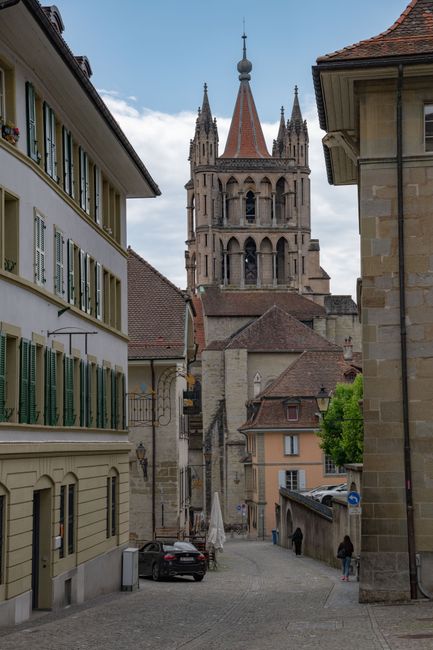
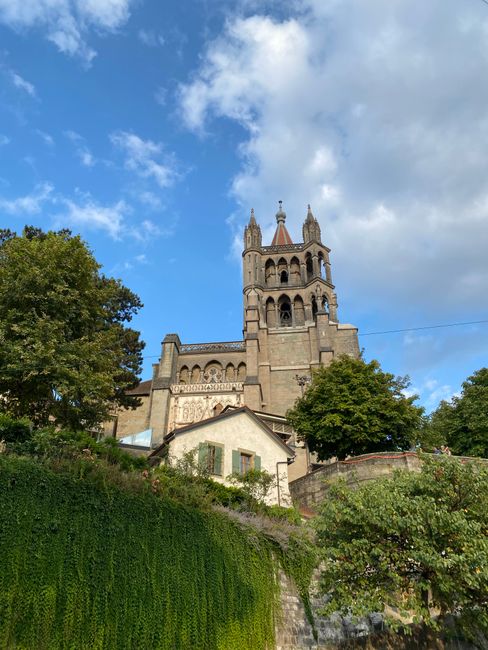
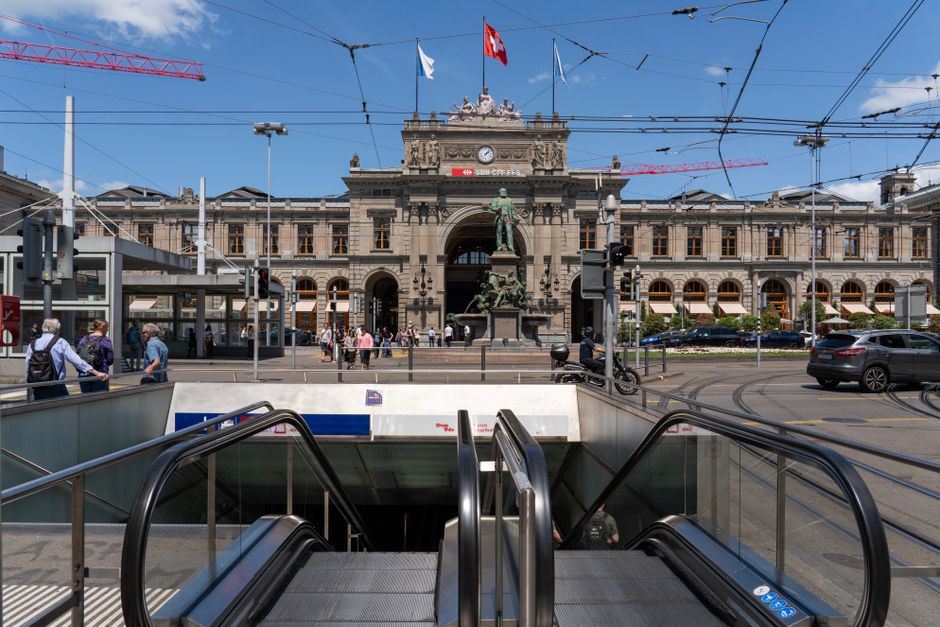
This guide gives practical addresses for key administrative offices and useful services in the city, their typical opening hours, price estimates in euros for common fees, and local tips to ease your move. We cover concrete situations too: arriving as a student at the University of Lausanne, starting a job with a local employer, or moving with your family. You’ll find information on insurance, domiciliation, opening a bank account, enrolling children in school, and social and tax obligations. Finally, to make the guide more practical, we include photographic landmarks for each important location to help you find your way on the ground.
Taking time to prepare your stay greatly simplifies integrating into Lausanne. Cantonal and municipal authorities are well-structured but strict about certain requirements (proof of housing, financial means, health insurance). Procedures often have timelines and costs: for example, a B permit for an employed resident can cost between €50 and €150 depending on type and duration (administrative fees roughly converted from Swiss francs). This article includes practical tips to optimize your appointments (documents to bring, quieter times like Tuesday–Thursday mornings), and useful addresses such as the train station, municipal services and academic institutions. Read this guide carefully and you’ll be ready to tackle the administrative steps and enjoy a successful stay in Lausanne.
1. Before you leave: visas, documents and practical preparations
The first step for any trip to Lausanne is checking whether you need a visa. EU/EFTA citizens (France, Germany, Italy, etc.) generally do not need a visa for short stays in Switzerland (tourism, visiting). However, for work, study or longer-term residence they must apply for a residence permit once in the country. Nationals from other countries should consult the Swiss embassy website in their country to determine the required visa type: short-stay Schengen visa, national long-stay visa (type D) for study or work, or a family reunification permit.
Documents to prepare before departure:
- Passport valid at least 3 months after your planned departure from the Schengen area (for visa holders); for EU/EFTA nationals, a valid ID card is usually sufficient.
- Letter of admission if you’re a student (for example: University of Lausanne, Quartier UNIL, 1015 Lausanne).
- Employment contract or job offer letter for work permit applications.
- Proof of funds such as bank statements or scholarship confirmations.
- Health insurance: certificates or confirmation that you will take out LAMal (Swiss health insurance) within three months.
- Proof of accommodation: rental agreement (lease) or host declaration.
Fees and timelines (estimates in euros):
- Short-stay Schengen visa fee: around €80 (subject to exchange rates and consular policy).
- National long-stay visa (type D): around €90–100.
- Cantonal administrative fees for permits: often between €50 and €150 (varies by canton and permit type).
Practical tips:
- Scan all your documents and keep copies in the cloud (Dropbox, Google Drive).
- Book appointments early for health insurance and population registration: waits can be several weeks in high season.
- If you arrive by air, consider having a local address lined up before applying for certain permits (some forms require a fixed address).

2. On arrival in Lausanne: registration, permits and the competent authorities
Once in Lausanne, the essential step is registering with the local authorities. Procedures differ depending on whether you’re an EU/EFTA national or from outside the EU. In the canton of Vaud, the Service de la Population (often called the Cantonal Population and Migration Office or SPOP on some forms) handles registrations and permits B, C, L, G. For an initial stay longer than three months you generally need to book an appointment to register officially and apply for a permit.
Relevant offices and addresses (examples):
- Service de la Population – Canton of Vaud (main counter): Central Office, Rue Caroline 17, 1014 Lausanne — Hours: Monday–Friday 08:30–12:00 and 13:30–16:30. Phone: +41 21 316 11 11 (check online before visiting).
- Lausanne Municipal Police – Central Station: Rue du Simplon 19, 1006 Lausanne — Open 24/7 for emergencies; administrative desk 08:00–17:00.
- Foreigners’ Office – Prefecture of the Lausanne District: Avenue de Rumine 2, 1005 Lausanne — By appointment only, typically 08:30–12:00 and 14:00–17:00.
Typical registration procedure:
- Book an appointment online via the official canton of Vaud website.
- Present your passport, rental contract, employment contract or university enrollment letter, a compliant ID photo and the completed form.
- Pay fees: usually by bank card or transfer (amounts are confirmed at the appointment).
- Receive a provisional permit the same day or an acknowledgment of receipt while the application is processed.
Processing times and tips:
- For B permits (residence for workers), expect 2 to 6 weeks processing time.
- L permits (short-term) can be processed faster but are more restrictive to renew.
- Bring both paper and digital copies; counters appreciate complete files to speed things up.
3. Insurance, healthcare, bank accounts and daily life
One major requirement in Switzerland is health insurance. Upon arrival, every resident must take out Swiss health insurance (LAMal) within the legal deadline—usually three months from arrival. Insurance is individual and children must be insured separately. Several providers and comparison tools exist: Comparis (online comparator), Helsana, CSS, Groupe Mutuel. Premiums vary widely by age, deductible and region; as a rough guide, a monthly premium for an adult can range from €200 to €450 (converted from CHF, depending on rates).
Useful health address:
- University Hospital of Lausanne (CHUV): Avenue Pierre-Decker 4, 1011 Lausanne — Emergency 24/7, patient reception 08:00–17:00, phone +41 21 314 11 11.
Opening a bank account:
- Common banks: UBS (Lausanne Station, Place de la Gare 1, 1003 Lausanne), Credit Suisse (Place St-François 4, 1003 Lausanne), PostFinance (Lausanne Station, Place de la Gare 13, 1003 Lausanne).
- Documents required: passport, proof of address (lease), employment contract or university enrollment, residence permit or acknowledgement of application.
- Fees: basic accounts often free or incur monthly fees of €0–10 depending on the package; debit/credit cards €20–80 per year.
Everyday life and local tips:
- Public transport: Lausanne is served by tl (Transports Lausannois) and the national network. A monthly « Mobilis » pass for the urban zone costs roughly €70–100 depending on the zones (indicative).
- Groceries: Coop City Lausanne (Rue de Bourg 8, 1003 Lausanne) and Migros (Rue de l’Ale 5, 1003 Lausanne). Typical prices: café at an outdoor terrace €3–5, baguette €1.50–2.50.
- Language: French is the administrative language, but many services publish information in English.
4. Work, study and taxes: specific obligations and practical advice
Working or studying in Lausanne involves additional steps. For employees, the employer helps with the permit application and social declarations. Students enrolled at the University of Lausanne (UNIL, Quartier UNIL, 1015 Lausanne) or at EPFL (located in nearby Ecublens) must obtain a student permit and follow rules on part-time work (usually limited for non-EU students).
Work permits and taxation:
- L/B permits: issued based on contract and duration. Employers withhold social contributions (AVS/AI/APG), unemployment insurance, occupational pension and accident insurance.
- Taxes: Switzerland uses a cantonal and communal tax system. Tax residents must file an annual return. For the canton of Vaud, the Tax Office is at Rue Caroline 4, 1014 Lausanne (hours: 08:30–12:00 and 14:00–16:30); phone +41 21 316 12 12.
- Tip: keep all payslips and contracts for tax filings. International tax treaties may prevent double taxation.
Students and education:
- University of Lausanne (UNIL) — Registration Office: Quartier UNIL, 1015 Lausanne — Registration desk hours: 09:00–12:00 and 13:30–16:00 (check the academic calendar).
- Tip: register promptly at enrollment and ask about student housing assistance (UNIL/EPFL housing resources).
Advice for entrepreneurs and freelancers:
- If you plan to start a business, contact the Vaud Chamber of Commerce: Avenue de la Gare 10, 1003 Lausanne — hours 08:30–17:00.
- Self-employed status requires specific registrations for social security and may trigger VAT obligations depending on turnover.

5. Housing, children’s schooling and local integration
Finding housing in Lausanne can be competitive. Central neighborhoods (Flon, Ouchy, Lausanne-City) are in high demand. Rents are relatively high: a studio typically ranges from about €700 to €1,200 per month, a two-room flat from €1,000 to €2,000 (indicative, converted from CHF). Property portals like Homegate.ch and Immoscout24 list up-to-date offers. Always request an inventory/condition report on move-in and keep a copy of the lease.
Useful housing addresses:
- Social Services of the City of Lausanne (housing assistance): Avenue de Rumine 4, 1005 Lausanne — Hours: 08:30–12:00 and 13:30–16:30.
- UNIL Student Housing Office: Quartier UNIL, Internef building — Hours: 09:00–12:00 and 13:30–16:30 (term-dependent).
Children’s schooling:
- Primary and secondary schooling is managed by the Municipality of Lausanne — Education Service: Rue de la Barre 2, 1005 Lausanne — Hours: 08:00–17:00 (enrollment by appointment).
- Documents required: birth certificate, vaccination record, proof of address, parents’ residence permit.
- International schools: International School of Lausanne, 6 Chemin du Golf, 1006 Lausanne — annual tuition varies between €12,000 and €35,000 depending on grade and options.
Integration tips:
- Take part in local events: markets, festivals (Fête de la Musique, summer lakeside festivals).
- Enroll in intensive French courses (Municipal Language Center, Rue du Petit-Chêne 38, 1003 Lausanne) to make settling in easier.

Conclusion — Key takeaways, final tips and practical resources
Getting ready to move to Lausanne requires careful administrative planning and knowing the main cantonal and municipal services. Key steps are: check visa requirements before you travel, prepare your documents (passport, contract, proof of housing, insurance), register promptly with the Service de la Population of the canton of Vaud, take out LAMal health insurance, open a bank account and complete the work- or study-related formalities. Administrative fees and insurance can add up: plan your budget and check current euro/Swiss franc conversion rates.
Final practical tips:
- Keep both digital and paper copies of all important documents.
- Set aside reserve funds for the first months (rent and security deposit commonly equal to 1–3 months’ rent).
- Contact municipal and cantonal offices by phone or email before visiting to avoid wasted trips: many require appointments.
- Use official online resources: canton of Vaud site (www.vd.ch), City of Lausanne site (www.lausanne.ch), and university pages for students (www.unil.ch).
Finally, be patient and proactive: Swiss authorities are meticulous and follow strict procedures, but once formalities are done you’ll enjoy a safe environment and high quality of life. By preparing well and following the recommendations in this guide, your move to Lausanne will go more smoothly and you’ll quickly be able to enjoy the cultural richness, scenic views of Lake Geneva and the excellent standard of living the city offers.